The aesthetic experience in Damien Chazelle’s 2016 film La La Land, while may vary among individuals, still urges the viewer to reflect on themes of love and loss. Under the surface of its appealing and striking visuals, the actual form of the film is paradoxical to the picture-perfect and idealistic world within the story. The content of the film in itself shows the tension between two lovers, Mia and Sebastian, based in Los Angeles, as they struggle with their creative passions and desire for one another. This pull between a hope for future possibilities together and the complexity of their lived reality, is depicted through the repetition of chance encounters, unfulfilled dreams and the recurring musical themes.
Tolstoy describes art as infecting the receiver with the artists feelings, “As soon as the spectator, reader, or hearer feels that the author is not writing, singing, or playing for his own satisfaction – does not himself feel what he wishes to express – but is doing it for him, the receiver, a resistance immediately springs up, and the most individual and the newest feelings and the cleverest technique not only fail to produce any infection but actually repel.” (Tolstoy) La La Land does this well by being sincere and true in its depiction of the internal conflict between the desire for close connection with others and the pursuit of one’s own creative endeavors. Tolstoy explains, “By words a man transmits his thoughts to another, by means of art he transmits his feelings.” (Tolstoy) The film frequently makes use of images without words, especially in the planetarium scene in which there is little to no dialogue, but rich and vivid displays of grandiose and fantastical backgrounds (fig 1). Another example of this is shown in Mia and Sebastian’s last encounter which consists of no exchange of dialogue but merely a glance (fig.4).
Additionally, Tolstoy mentions how art can blur the lines between a characters experiences and the viewers. Every work of art causes the receiver to enter into a certain kind of relationship both with him who produced, or is producing, the art, and with all those who, simultaneously, previously, or subsequently, receive the same artistic impression.” (Tolstoy) With that said, the viewer feels part of a greater community of artists, and relates to the creative struggles of the protagonist Mia. This is most effectively shown in the audition scene (fig.2) within the film where Mia mentions the story of her aunt who inspired her to pursue a career in acting. This song titled Here’s to the Fools that Dream, immediately speaks to a large audience of creatives and ties the experience of an entire community in lyrics such as, “Here’s to the hearts that break, here’s to the mess we make.”
Even though the visuals of the film La La Land can seem very appealing, with the use of solid, vibrant colors and serene backdrops, the story in itself could be interpreted as tragic. Mia and Sebastian grow closer to one another as they simultaneously face conflict between choosing their careers over their relationship. In the end, since the couple does not end up together, even though this may be the opposite of what the characters want and therefore what the audience may expect from the film, it still manages to play a pivotal part in the aesthetic experience of the viewer. This is done by evoking both pleasure and displeasure by the films conclusion, and ending montage. The idea that their connection was temporary allows viewers to engage with the film with disinterested pleasure, without the desire to see the couple end up together happily. Additionally, there are also elements of imagination, where viewers can attach their own meaning to the ending of the film. La La Land encourages this by showing two alternate endings and versions of the couples story and how their interaction unfolds from the moment they met. The alternate sequel where the couple chooses romance over their careers, allows viewers to get a glimpse of that alternate ending, even if it’s purely imaginative.
The combination of both the moral desire to pursue the romantic connection and the disinterested pleasure of them not ending up together, yet being able to envision a life where they had made a different choice, creates a sense of the sublime that Kant mentions. The possibility of how their life could unfold creates overwhelming possibilities and feelings within both the characters and the audience.
Since the film plays back and forth with the timelines of the story, thus implying the concept of la la land and the characters imagination, or utopian world, we see jumps within the chronological order of the plot. The characteristic of a film not being able to change in its order, when being received by the viewer, gives it a realistic aesthetic experience. Kuntzel mentions this in the words, “But viewing a film again and again changes nothing of its order. While I can freely move about in a book (stop, go back, compare two statements, list the functions attached to different actants), at the cinema theater I am inevitably submitted to the chain of images and the flux of sound, to their regulated rhythm. The film and I, the narrative unreel outside of me without any possible intervention on my part.” (Kuntzel, pg.41)
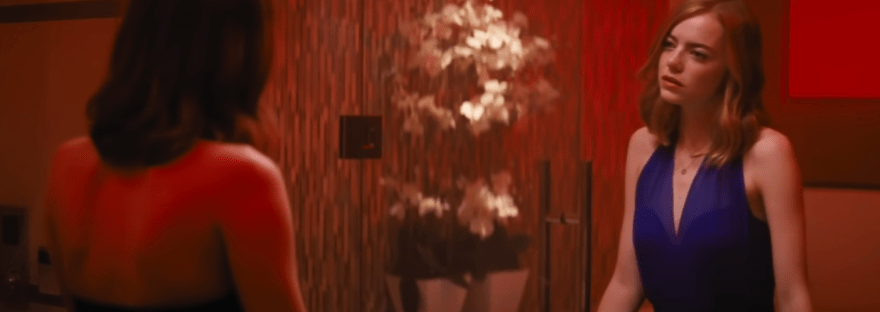
Given that the film is a musical, the use of sound helps bring the characters to life, especially with sequences of characters lip-syncing parts of a song, in a manner of inner monologue. An example of this is seen in the song Someone in the Crowd, as Mia reflects her inner thoughts in front of the mirror, within the lyrics of the song (fig.3). Kuntzel describes this as, “In the second lexia intervenes the sound and musical matter which talking cinema takes over. […] it authenticates the characters on screen at the same time it attributes to them a ‘true-to-life’ quality which the spectator does not doubt.” (Kuntzel, pg.45)
Altogether, by creating a paradox between both pleasure and moral desire with disintered pleasure, the film manages to evoke strong feelings of both awe, hope and despair within the viewers. The utopian world shown in the realistic script and form of the film gives the audience a sincere and true depiction of reality while allowing room for imagination and hope for a possibility that may never unfold. In this way, La La Land creates an aesthetic experience between the vulnerability of human longing and connection in an ever changing and challenging world, with the cinematic visuals of perfection and beauty.
References
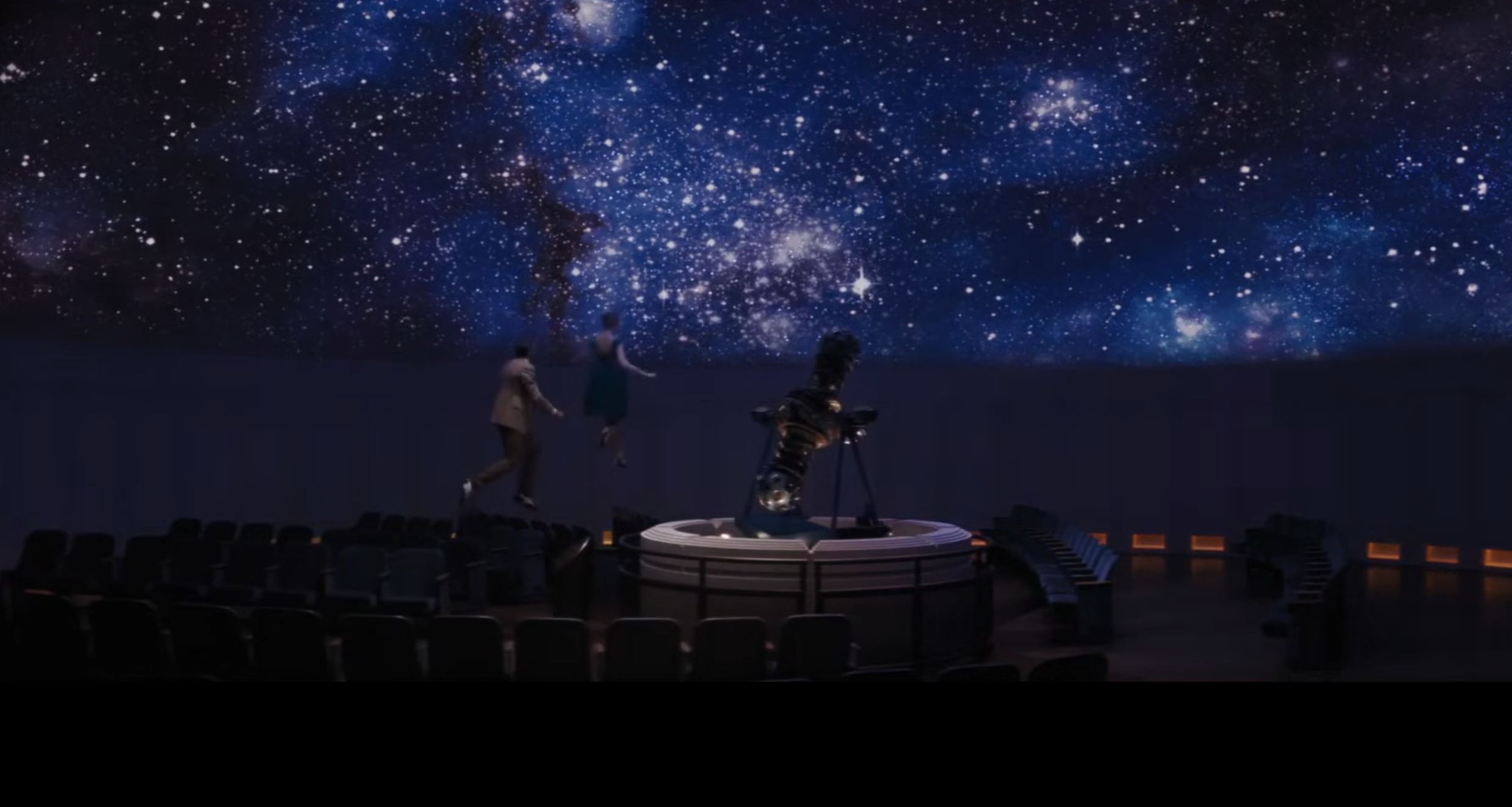
Fig.1
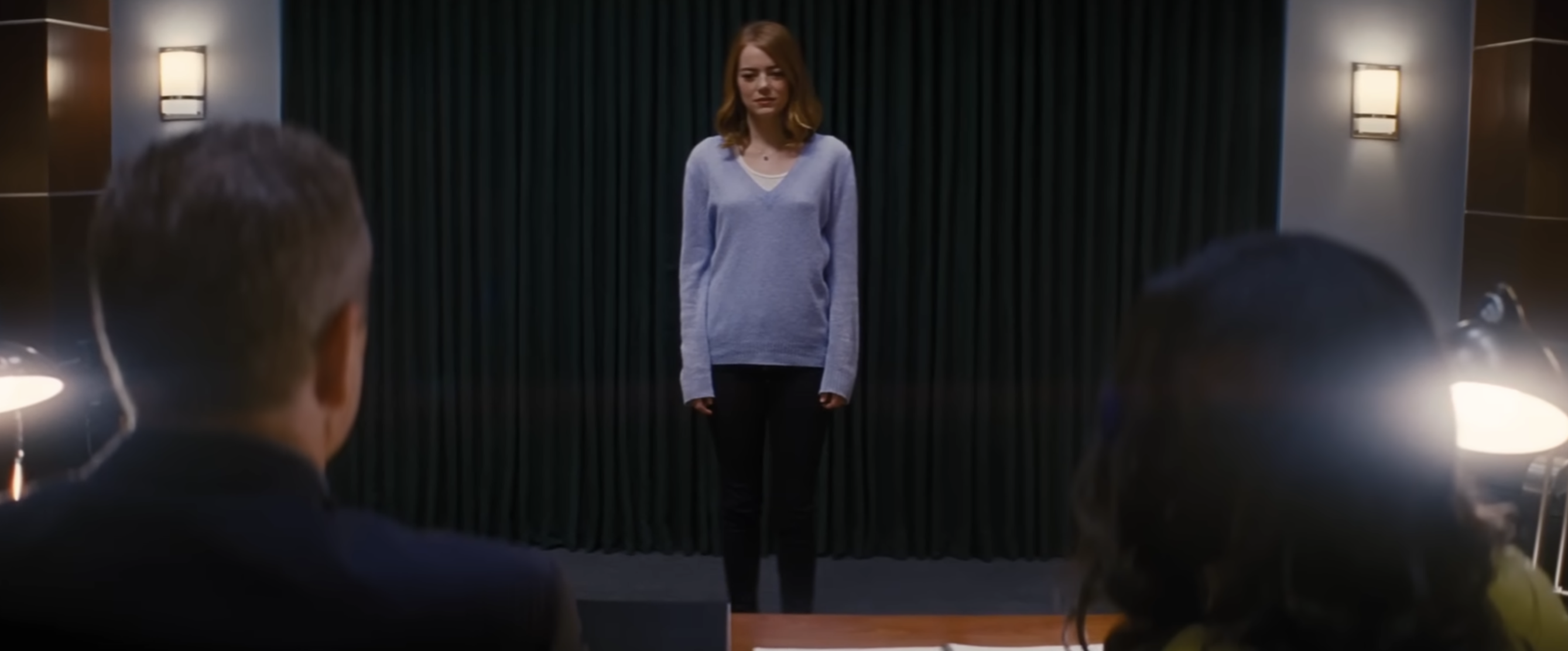
Fig.2
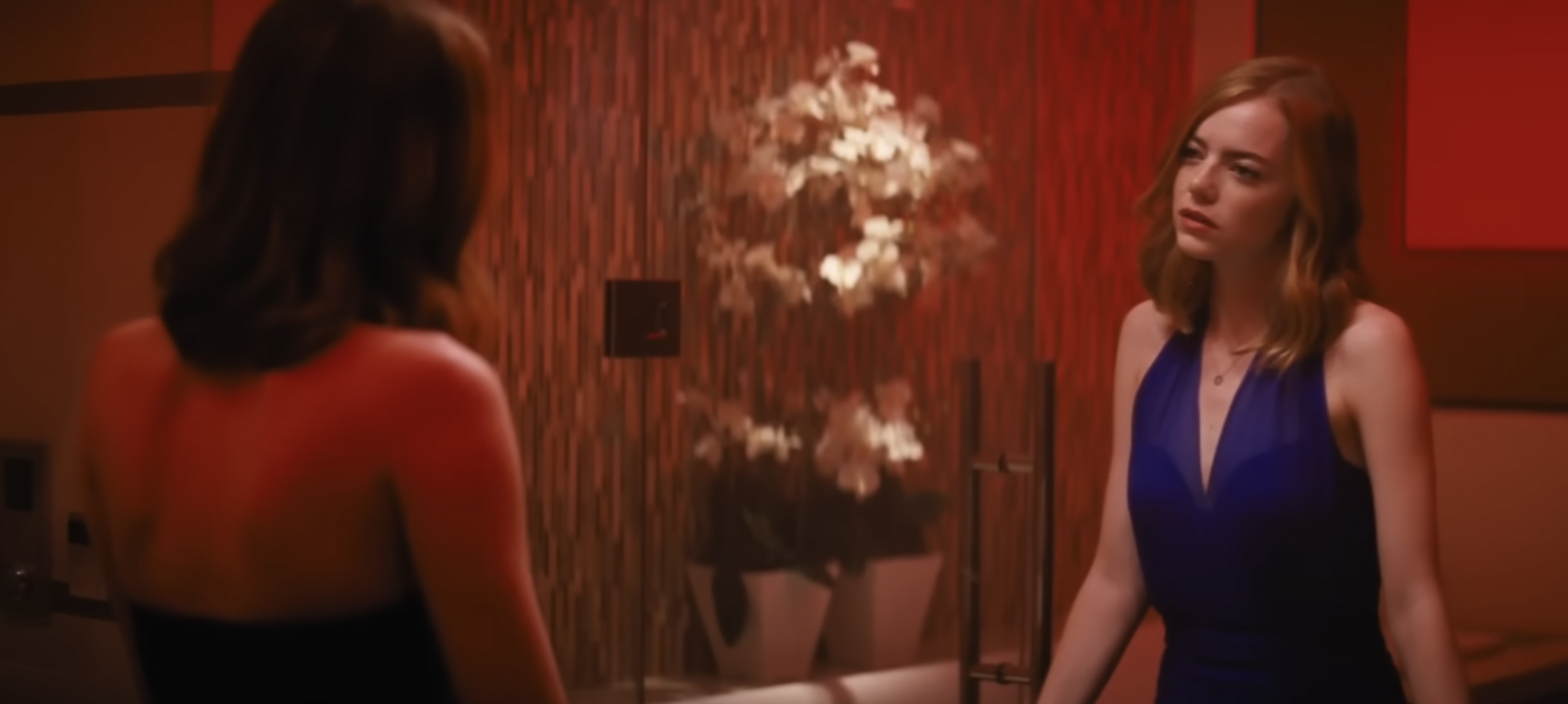
Fig.3
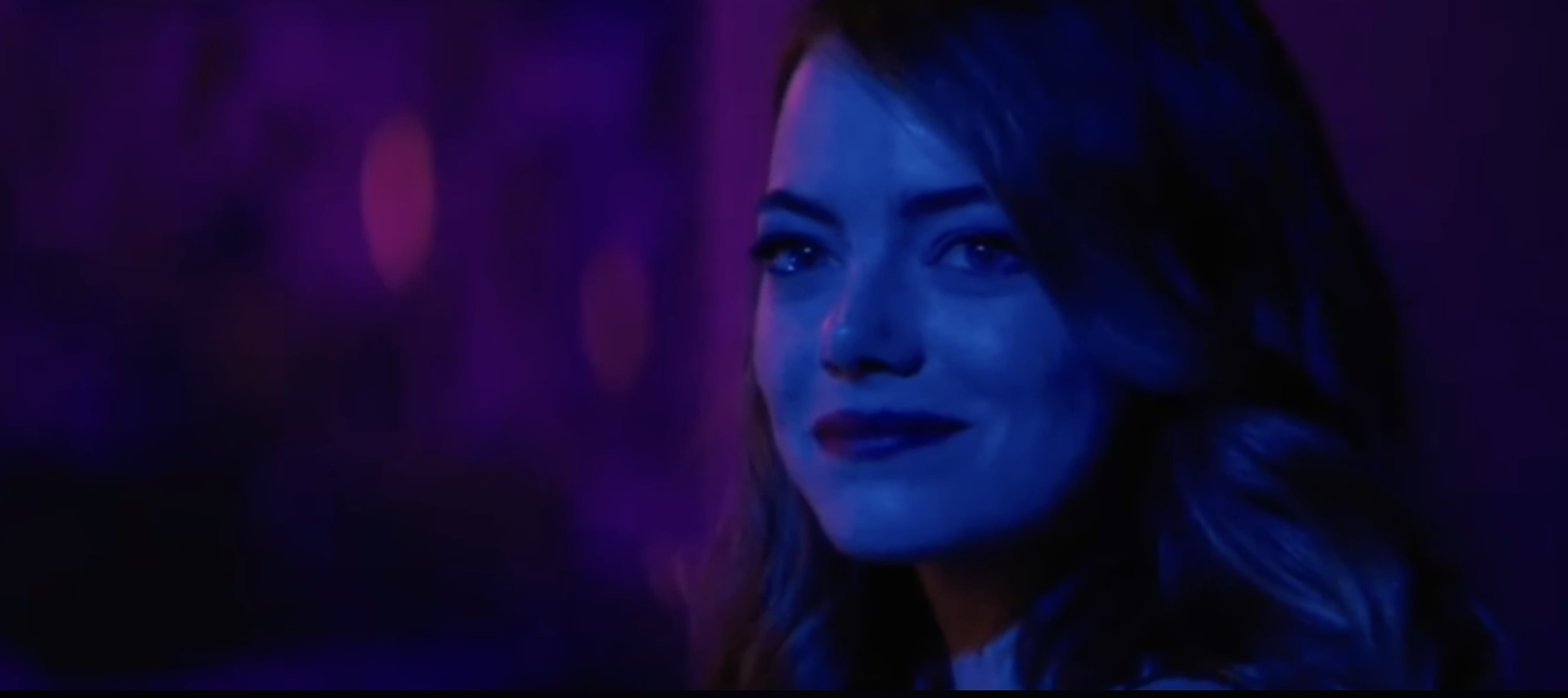
Fig.4
Work Cited
Kant, Immanuel. Critique of the Power of Judgment. Translated by Paul Guyer and Eric Matthews, edited by Paul Guyer, Cambridge University Press, 2000.
Tolstoy, Leo. What Is Art? Translated by Aylmer Maude, Hackett Publishing Company, 1996.
Kuntzel, Thierry. “The Film-Work.” Camera Obscura, vol. 2, no. 5, 1980, pp. 6–70.
 metacogmoon.com